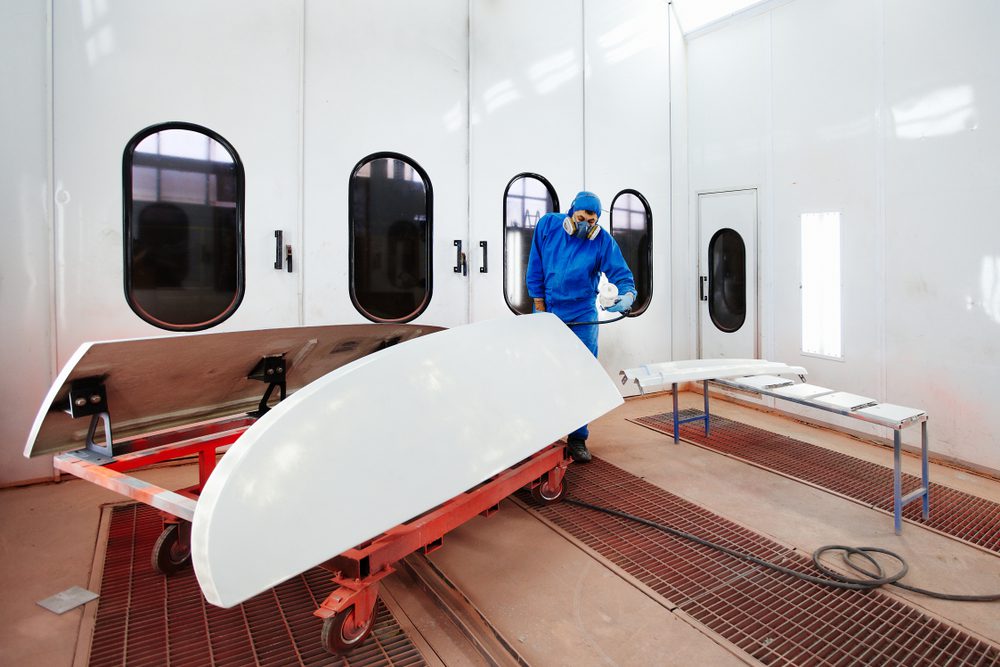
For many operators, a professionally-engineered booth is the most effective and economical way to apply spray and finish compounds responsibly. While booths mitigate many of the risks associated with the application of volatile or hazardous substances, they are only successful if kept in full compliance with applicable regulations.
Since booth operations present a higher risk of fire and hazardous exposure, owners are responsible for meeting several minimum standards enforced by different official agencies. When facing differences between local and federal rules, companies are often required to meet the one with the stricter requirements.
Navigating code compliance doesn’t have to be overwhelming. Read our guide to learn the essential requirements for spray booth compliance, or contact Spray Systems today to discuss your specific spray booth needs. Our team specializes in designing and manufacturing custom paint and spray booths that meet all applicable safety standards from day one.
Information You Need
Code violations cannot be understated. Download our comprehensive PDF to learn how to design the perfect spray booth while avoiding code violations before it costs you.
OSHA Safety Laws: Protecting Your Workers
Key OSHA Requirements
- Ventilation & Air Quality: Minimum 100 feet/minute air velocity across booth openings, continuous ventilation during all spray operations, ventilation gauges, air monitoring, and air make-up systems
- Worker Protection: Proper respirators, protective clothing, eye and face protection, documented safety training, and written operating procedures
- Workspace Safety: Minimum 100 foot-candles of lighting at work surfaces, fire extinguishers, proper separation from non-spray areas, clearly marked emergency exits, and properly rated electrical equipment
NFPA Standards: Fire Prevention and Protection
Key NFPA 33 Requirements:
- Booth Construction: Non-combustible or fire-resistant materials, smooth interior surfaces, proper structural support
- Ventilation System: Exhaust ducts made of non-combustible material, access doors, interlocks for ventilation failures, and no recirculation of contaminated air
- Electrical Safety: Class I, Division 1 or 2 rated equipment in spray areas, explosion-proof lighting fixtures, proper grounding, and no standard electrical outlets in spray zones
- Fire Protection: Automatic sprinkler system, Portable fire extinguishers, fire and alarm systems, and emergency shut-off switches
International Fire Code (IFC) Requirements
Common IFC Requirements
- Permits for booth installation and operation
- Specific separation distances from property lines
- Annual fire safety inspections
- Emergency planning and evacuation procedures
- Coordination with local fire departments
Environmental Regulations
Air Quality Requirements
- Federal (EPA): Clean Air Act compliance, VOC and HAP emission limits, NESHAP standards for specific industries, and record-keeping and reporting
- State & Local: Air quality permits, emission control requirements, stack testing requirements, and annual reporting obligations
Waste Management
- What’s Regulated: Used filters, waste solvents and thinners, coating residues and overspray, contaminated rags and protective equipment
- What You Need: Proper waste characterization, hazardous waste storage area, licensed disposal contractors, and detailed waste records
- Water Discharge: Permits for booth washwater, pretreatment before sewer discharge, no discharge to storm drains, and regular sampling and testing
Local and State Requirements: The Added Compliance Layer
Local requirements often surprise booth operators because they vary so much from place to place. Here’s who typically has a say in your spray booth compliance:
- Local Fire Marshal: Additional fire protection requirements, special inspection procedures, and annual permit renewals
- Building Department: Construction and installation permits, structural requirements, and integration with building systems
- Zoning Board: Where spray operations are allowed, noise limitations, and setback requirements
- Environmental Agencies: Local air quality rules, discharge permits, and hazardous material storage
- Utilities: Electrical service requirements, natural gas connections, and water supply specifications
Common Compliance Pitfalls to Avoid
- Inadequate Airflow: Not maintaining required velocities across all booth openings
- Improper Electrical Installation: Using non-rated equipment in hazardous locations
- Missing Documentation: Failing to maintain required records and logs
- Deferred Maintenance: Allowing filters to clog or equipment to deteriorate
- Training Gaps: Not properly training all operators and maintenance personnel
- Permit Violations: Operating outside permitted parameters or without required permits
- Incompatible Materials: Using equipment not rated for specific coating types
Pursue Full Compliance with Booth Experts
As experts in compliant spray booth design, Spray Systems routinely helps customers navigate local and federal regulatory requirements. Our experienced advisers educate customers and guide them toward the key details that help them make informed decisions.
Ready to ensure your spray booth is fully compliant? Don’t wait for a violation or failed inspection. Contact our spray booth experts today for a free consultation. We’ll help you understand exactly what your booth needs to be code-compliant and help make a plan to get you there.