Industrial Spray Finishing Booths and Enclosures

We understand that a spray booth is an important investment for manufacturers in many industries, as it directly impacts your finishing quality and rate of production. A poorly-designed spray booth can present a range of issues that negatively affects job performance, jeopardizes workplace safety, and places unnecessary strain on a company’s bottom line.

We want to help you avoid these pitfalls, which is why we’re committed to engineering custom industrial spray finishing booths & enclosures that are reliable and designed to facilitate your production goals—not impede them. It’s our firm belief that a well-designed industrial spray finishing enclosure provides our customers with an environment where they can truly thrive as skilled professionals while adding long-term value to their production process.

All Spray Booth Products

Paint Booths

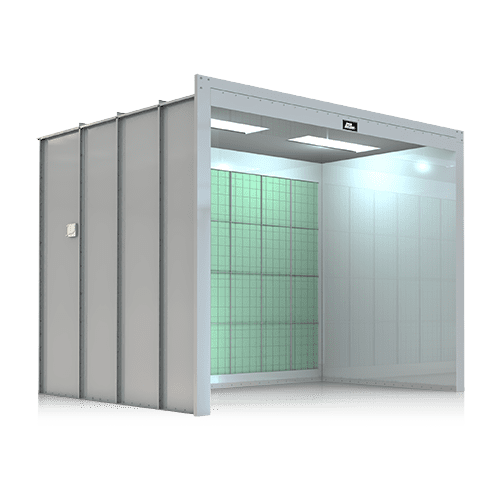
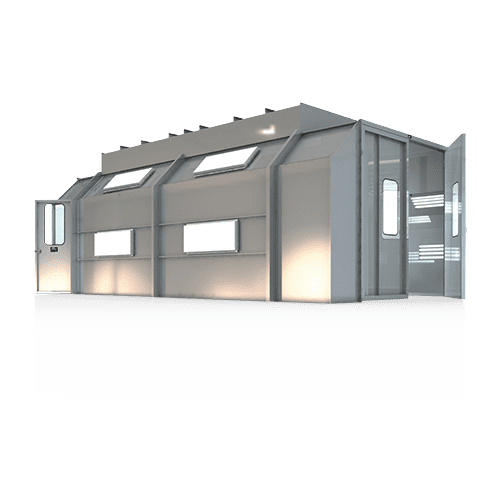
Whether you need a large aircraft spray booth or a small bench booth, Spray Systems products are engineered to help achieve the highest quality paint finishes, while balancing safety, reliability and cost effectiveness. We offer a comprehensive line of high-performance spray booths built to facilitate production processes for optimum performance.
Powder Booths

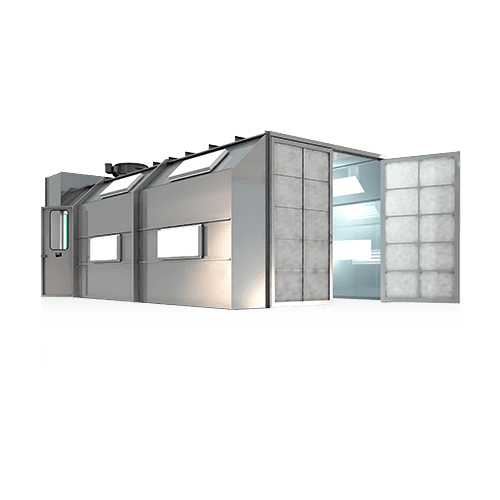
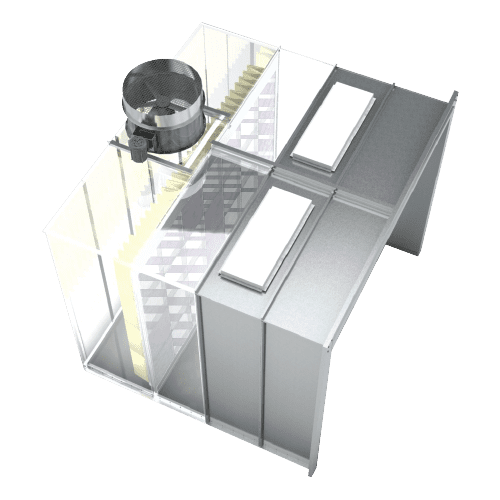
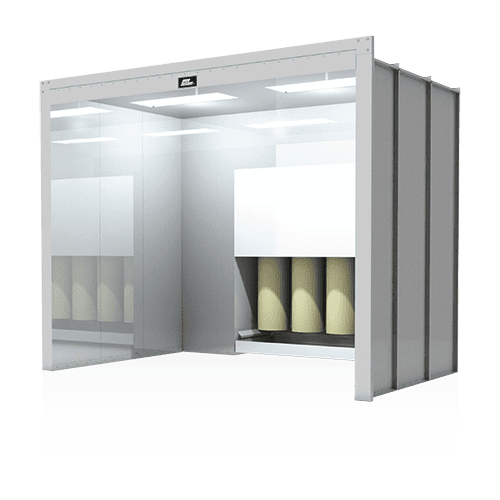
Designed with durable premium-grade G-90 galvanized steel, our powder booths are built to last while also facilitating a wide range of powder applications and finishing processes. We offer a range of recovery and non-recovery powder coating booths including cartridge-style powder booths, powder automatic booths and powder conveyorized booths.
Drying Enclosures

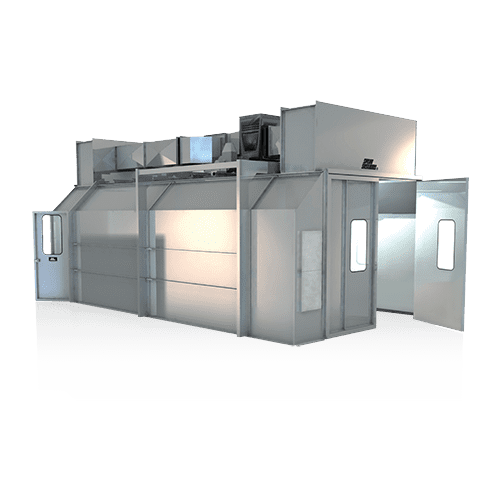
Spray Systems drying enclosures are designed to increase productivity and accelerate the drying time of water-borne and solvent-based coatings. Our drying enclosures are equipped with fan systems that use turbulent air to further decrease drying time, along with infrared and convection curing systems for optimal performance.
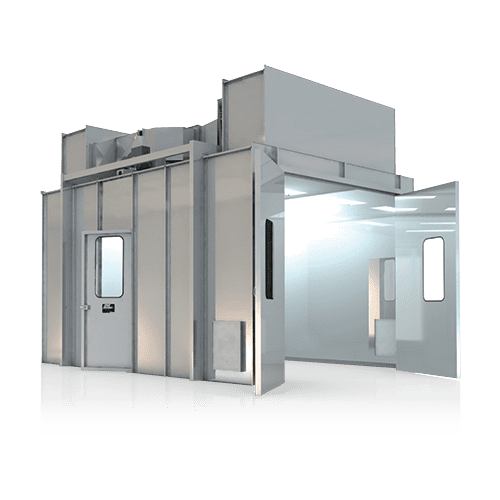
Air Make-Up Units

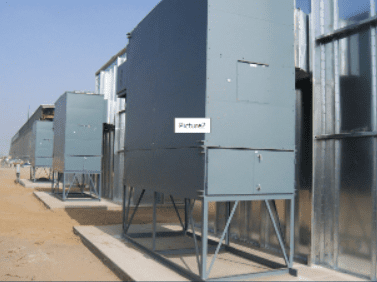
Air Make-Up Units are essential to meet air flow requirements efficiently. They help maintain an even balance of air pressure inside and outside the booth and promote a cleaner and safer environment within the unit. Typically, these units are installed outside the building—either horizontally on the building’s roof or vertically alongside it.
 

Air

Exhaust Chambers

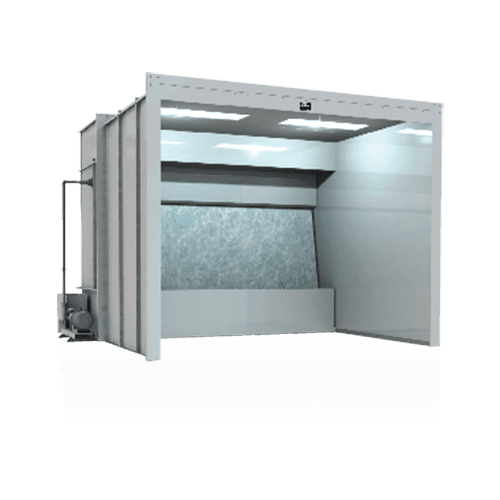
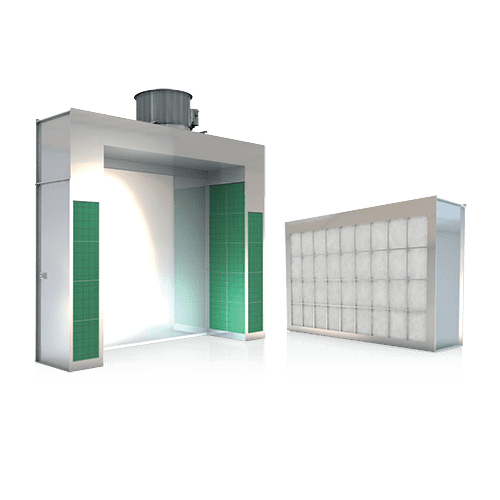
A fantastic lower cost spray booth option, our exhaust chambers are ideal for converting an area within your facility for spray painting. Additionally, they can also be used to create a preparation area for sanding or cleaning parts prior to finishing. Like all Spray Systems products, they are engineered using durable materials to withstand excessive wear and tear.
Prep Stations

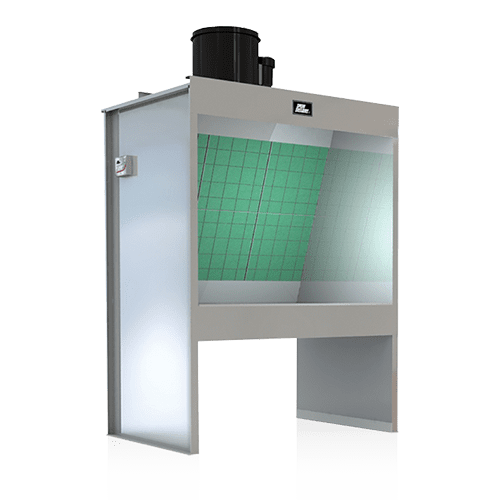
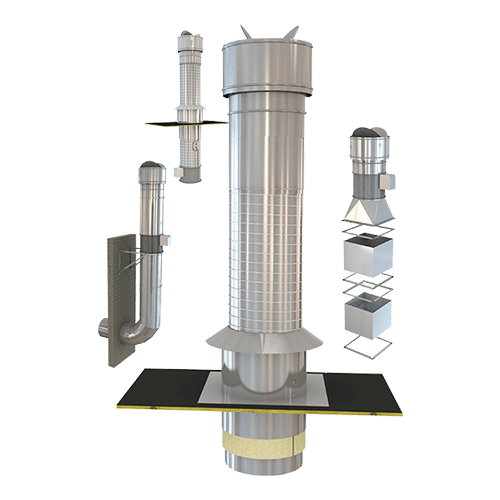
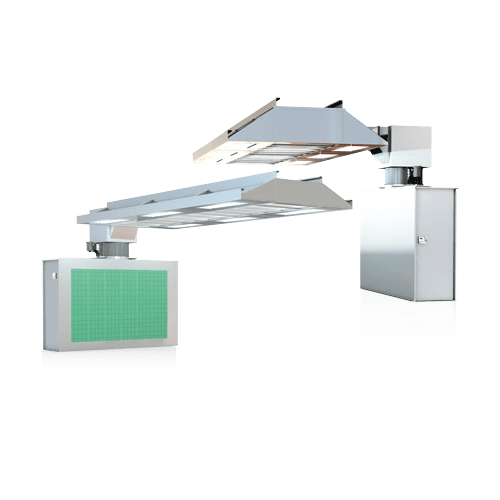
Designed with a whisper-quiet exhaust fan and high-efficiency motor, our prep stations help mitigate the contamination of paint via ambient dust and debris. We offer two prep station models, a semi-downdraft and full-downdraft ventilation design, to accommodate the unique needs of any production facility.
Mixing Rooms

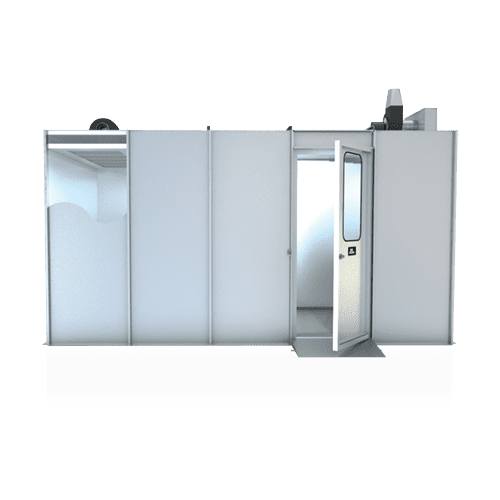
All of our mix rooms are modularly designed via prefabricated sheet metal for maximum flexibility of application. Our standard mix rooms meet all applicable codes, and have a 3-inch high spill containment reservoir, a built-in workbench and a safe environment for mixing and storing paint.
Contact Your Spray Booth Specialist Today

NFPA 33 FAQS

General Compliance

What is NFPA 33, and who needs to comply with it?

NFPA 33 is the national standard for spray application using flammable or combustible materials. Any facility that operates spray booths, spray rooms, or spray areas for industrial coating applications must comply with NFPA 33. This includes aerospace manufacturers, automotive facilities, furniture manufacturers, and any industrial operation using spray-applied coatings.

Is NFPA 33 legally required?

While NFPA 33 itself is a standard, not a law, it is typically adopted and enforced by local authorities having jurisdiction (AHJ), OSHA regulations, insurance companies, and building codes. Non-compliance can result in fines, shutdown orders, insurance issues, and increased liability in case of accidents.

How often is NFPA 33 updated?

NFPA 33 is typically revised every 3-5 years. The current edition is 2018, with updates expected periodically. It’s important to verify which edition your local jurisdiction has adopted, as they may not immediately adopt the newest version.

Booth Design & Construction

What’s the minimum distance required between a spray booth and other operations?

Spray booths must be separated by either 3 feet of clear space OR a partition with a 1-hour fire resistance rating. Multiple connected spray booths are considered a single operation and don’t require separation from each other.

Ventilation & Air Flow

Can I recirculate air from my spray booth back into the plant?

For liquid spray operations, recirculation is only allowed if you meet ALL requirements, including: particulate filters, vapor monitoring below 25% of the lower flammable limit, automatic shutdown systems, and AHJ approval. Powder coating booths have more flexibility for recirculation with proper filtration and monitoring.

Do exhaust fans need to run continuously?

Yes, ventilation must operate during all spray operations AND continue afterward long enough to exhaust vapors from drying coatings. Automatic spray equipment must be interlocked so spraying cannot occur without ventilation running.

What type of fans are required?

Fans must be spark-resistant and constructed of materials appropriate for the materials being sprayed. The fan motor must be located outside the airstream or be rated for the hazardous location classification.

Electrical & Safety Systems

What electrical equipment can I use inside the spray booth?

All electrical equipment inside the booth must be rated for Class I, Division 1 hazardous locations. This includes lights, switches, outlets, and any control equipment. Equipment within 3 feet of booth openings must be Class I, Division 2 rated.

Do I need explosion-proof lighting?

Not necessarily. Lights separated from the spray area by approved glass panels and serviced from outside can be standard-rated. However, any lights inside the classified area must meet hazardous location requirements.

Is fire suppression required?

Fire suppression requirements depend on your local codes and the specific materials being sprayed. Automatic sprinkler systems are often required, and portable fire extinguishers must always be readily available.

Materials & Storage

How much paint can I store near my spray booth?

If your mixing room is within 6 feet of the spray area, the combined total cannot exceed 120 gallons. If separated by more than 6 feet, you can store up to 300 gallons in the mixing room and 60 gallons in the spray area.

What are nitrocellulose applications, and why do they require special handling?

Nitrocellulose lacquers are fast-drying coatings used on furniture, musical instruments, and some automotive finishes. They require special handling because overspray can spontaneously ignite. NFPA 33 requires either water-wash booths or daily cleaning of dry filters and baffles for these materials.

Can I spray different types of coatings in the same booth?

Generally, yes, but you cannot use the same filters for materials that may spontaneously ignite when mixed (like nitrocellulose and oil-based materials). Some material combinations may require complete cleaning between applications.

Powder Coating Booths

Are powder coating booths subject to different requirements?

Yes, Chapter 15 of NFPA 33 specifically addresses powder coating with unique requirements for electrical grounding, dust collection, explosion protection, and the advantage of being able to recirculate filtered air back into the plant.

Do I need explosion venting for powder coating?

Depending on the size and design of your powder system, explosion protection per NFPA 68 may be required. This typically involves explosion venting or suppression systems for dust collectors and recovery systems.

Maintenance & Operations

How often do I need to change booth filters?

NFPA 33 doesn’t specify exact intervals for standard operations, but filters must be changed when they become loaded enough to affect booth performance. For nitrocellulose applications, daily filter changes are required. Always follow manufacturer recommendations and maintain proper airflow.

Who is the “Authority Having Jurisdiction” (AHJ)?

The AHJ is typically your local fire marshal, building inspector, or OSHA representative who has the legal authority to enforce codes and approve installations. Requirements can vary by location, so it’s important to identify and work with your specific AHJ.

Where can I get a complete copy of NFPA 33?

The complete NFPA 33 standard can be purchased from NFPA.org. Free access to view (but not print or download) the standard is also available on their website with registration.